
Optimizing the CLP model of sepsis-associated AKI
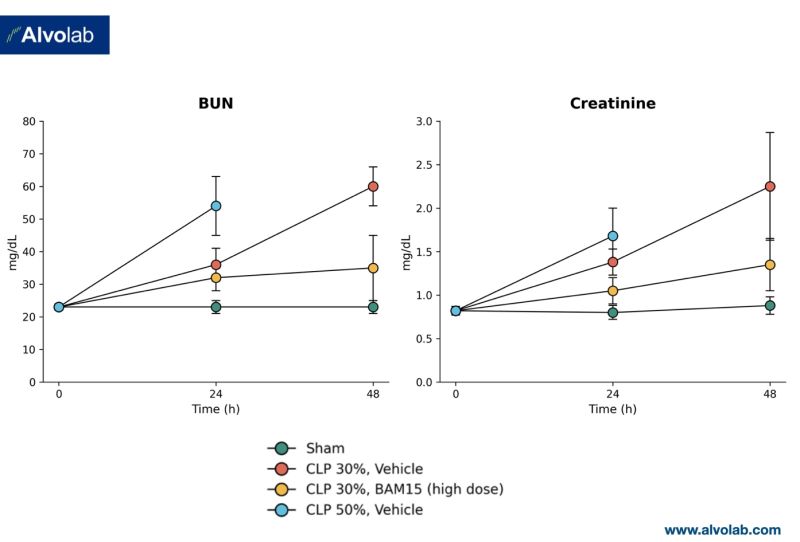
Sepsis-associated acute kidney injury (SA-AKI) remains one of the most common and deadliest complications of sepsis, yet translating renoprotective therapies from bench to bedside has been notoriously difficult. Model choice and execution matter.
Alvolab offers both the LPS and the cecal ligation and puncture (CLP) models of SA-AKI, with CLP remaining the field's gold standard. Together with a pharma collaborator, we recently tested the CLP model in mice systematically, evaluating ligation length (30% vs. 50%) to optimize injury severity and the survival window; antibiotic timing (immediately post-op vs. 6 h delayed) and composition (imipenem alone vs. imipenem-cilastatin); reference compounds with previously reported renoprotective effects, including BAM15; and early vs. late fluid resuscitation.
BUN and creatinine over 48 hours showed a clear severity gradient. 30% ligation produced graded, survivable renal dysfunction, while 50% ligation drove a much sharper rise in both markers, and those mice did not survive to 48 hours. Against this backdrop, high-dose BAM15 meaningfully blunted the rise in BUN and creatinine relative to vehicle, demonstrating a viable therapeutic window in the model.
Our scientific advisor Rafael Kramann and colleagues have also just published a review of new insights into preclinical SA-AKI models, including how spatial transcriptomics is reshaping our understanding of the CLP and LPS models.
Interested in running CLP or LPS studies with a tailored protocol? Get in touch at contact@alvolab.com.